CHOOSEData & productivity
Inbox Zero Tool with Jev and Claude

Naren Katakam@narenkatakam
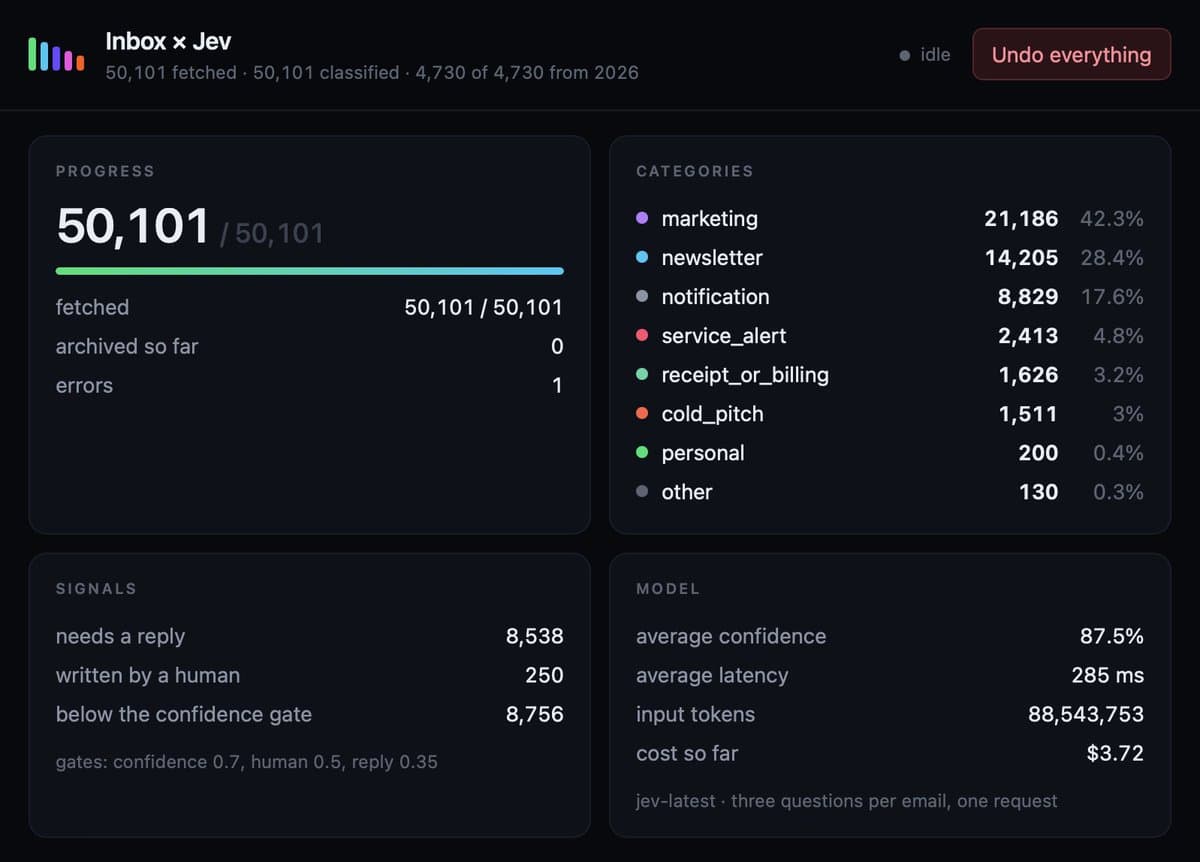
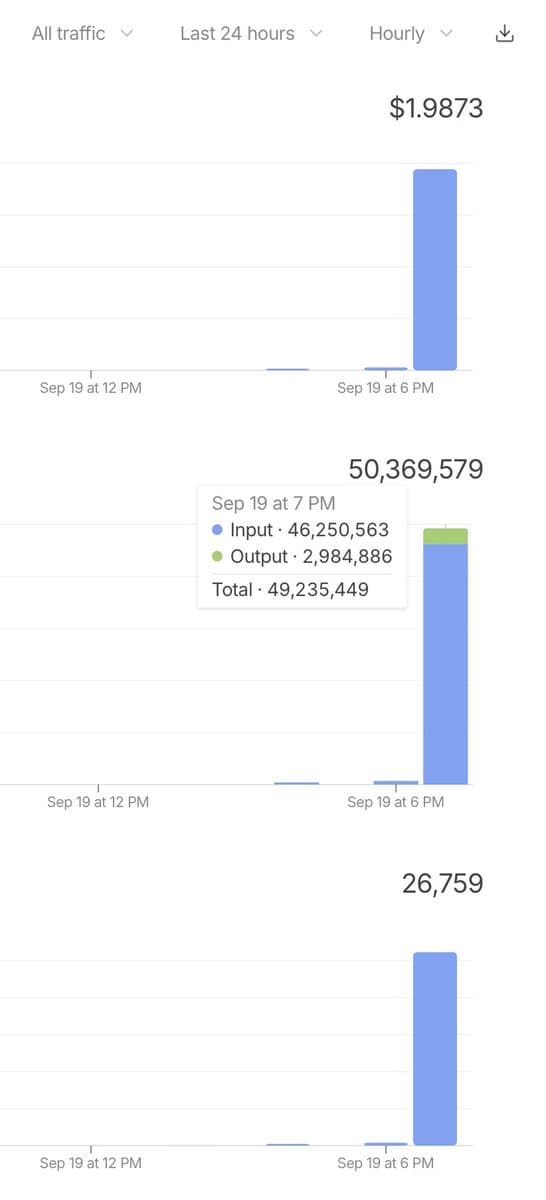
An inbox tool was built using Jev and Claude AI to achieve inbox zero, processing over 50 million tokens to clear 21 years of accumulated emails.
TakeBetter structure seemed to improve the results: I ran another experiment, giving Jev a clear decision tree with explicit classification rules.
I had fun experimenting with @typesafeai - Jev this weekend. I built an inbox tool with @claudeai and Jev. The goal was to get to inbox zero.
The kicker: 50,101 unread, the oldest from April 2005. After 50 million tokens, $1.98 and 90 minutes later, inbox zero on 21 years of noise. Along with some insights on my inbox.
Three things I learned:
1. My inbox was mostly a history of things I’d never unsubscribed from: 42% of my inbox was unsurprisingly marketing mails, 28% newsletters, 18% notifications. Twenty-one years of not unsubscribing, quantified.
2. Sorting junk and recognising humans are very different skills: Jev classified just 0.4% of my inbox as emails written by a person. Roughly 200 out of 50,101. That felt suspiciously low. I checked, and the actual number was much higher. Currently Jev is good at telling one kind of automated email from another. Recognising a human? Less convincing.
3. Better structure seemed to improve the results: I ran another experiment, giving Jev a clear decision tree with explicit classification rules. Its accuracy appeared to improve, though I haven’t measured the difference yet.
My takeaway: getting to inbox zero was satisfying. Understanding where the tool got things wrong was more useful.