CHOOSEBusiness workflows
Jev: Structured Decision-Making AI

Patil@logic_bound
Jev is an AI model designed to make structured decisions by taking input information, a question, and predefined answers, then returning a choice with probabilities that code can directly utilize.
TakeYour code could route the ticket there, with uncertain cases going to a person.
Pattern✦ Decision layer primitives
Jev could change how we build everyday software.
Jev is making boring AI surprisingly exciting
Imagine a customer sends your app this message:
“I was charged twice. Please reverse the extra payment.”
Before anyone writes a reply, your software has a decision to make.
Billing, technical support, or sales?
Now multiply that by thousands of messages. Add decisions about urgency, escalation and which tool to call next.
These tiny judgments start adding up.
That’s what makes Jev interesting.
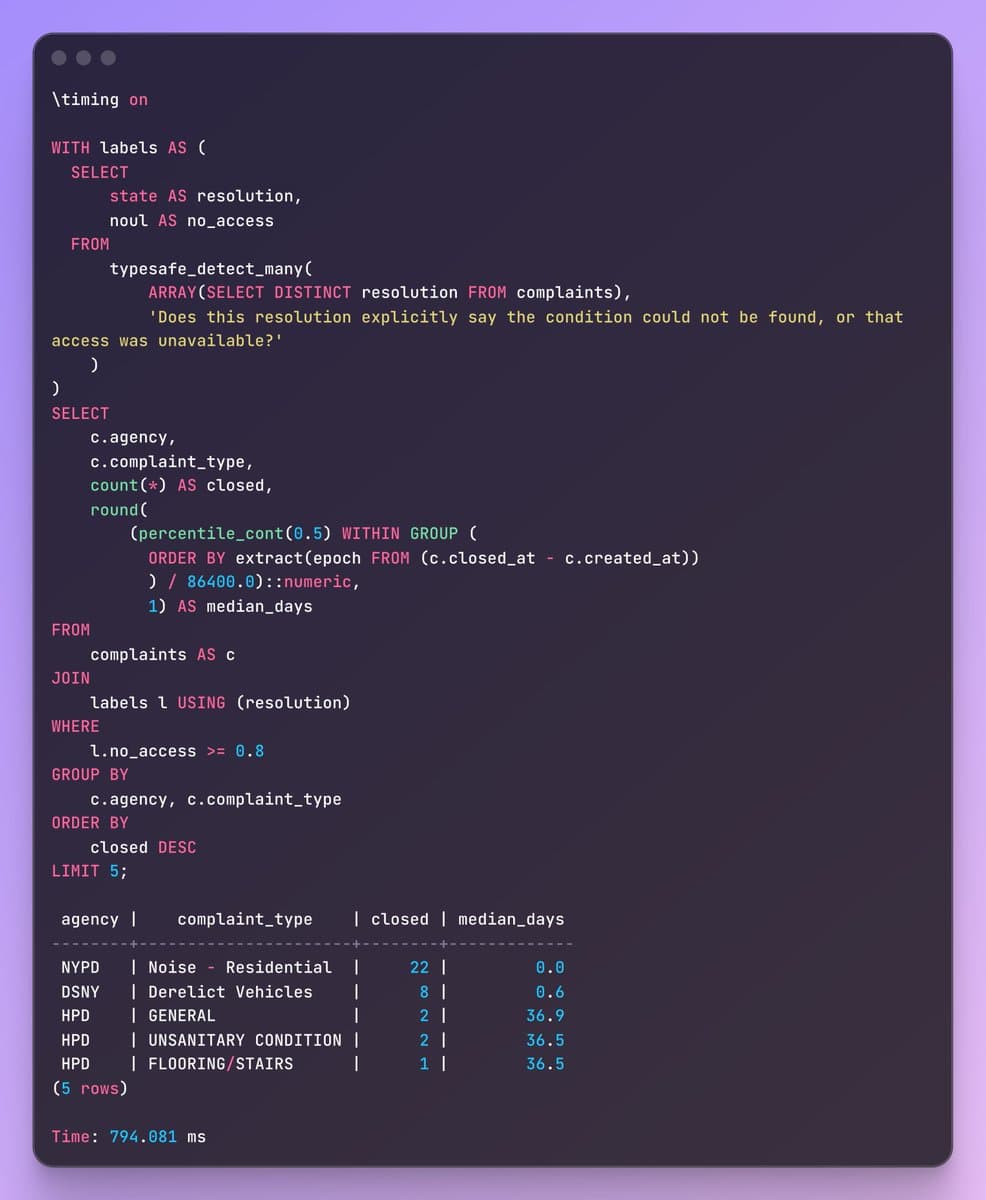
Jev is a model from TypeSafe AI built to make structured decisions. You give it information, ask a question and define the available answers.
It returns a choice and probabilities your code can use directly.
For our example, Billing is the expected choice. Your code could route the ticket there, with uncertain cases going to a person.
That’s an illustration, not a result from my own testing.
Here’s the speed angle:
TypeSafe reports end-to-end response times of 70–500 milliseconds.
Its published tests were generally run near its US West Coast service. Your location, input and workload can change that.
How does it work?
Jev doesn’t generate a written explanation token by token. It produces structured decisions and can evaluate multiple independent questions in parallel.
Which department?
How urgent?
Does this need review?
Other AI models already handle classification. The opportunity here is making those repeated decisions fast and cheap enough to use throughout an application.
Try it yourself:
Sign in at console.typesafe.ai/playground
Paste the customer message as the “state.”
Add a Choice question: “Which department should handle this?”
Define Billing, Technical support and Sales.
Inspect the answer and probabilities.
Then try a harder message:
“My payment failed because the checkout page crashes.”
Does it distinguish a technical problem from a billing problem?
Test several cases you’ve already labelled. Compare accuracy and response time with your current approach.
A valid choice can still be wrong. Speed only matters when the decisions are useful.
That’s the experiment worth running.
Quickstart:
docs.typesafe.ai/introduction/quickstart
Published performance claims:
typesafe.ai/blog/introducing-system-one-mo