ROUTEAgents & automation
Jev: Typed AI Agent Decisions

adidshaft@adidshaft
Jev is an AI model that takes shared state and typed questions, providing direct code-usable answers with choices, scores, and probabilities, enabling efficient decision-making for AI agents.
TakeIt answers them together with choices, scores and probabilities that code can use directly.
Pattern↑ Jev AI decision models
Jev is absolutely brilliant and right next on the AI scaling
by @CompleteSkeptic and @typesafeai is one of the few recent model launches that feels like it could change how agents are actually built.
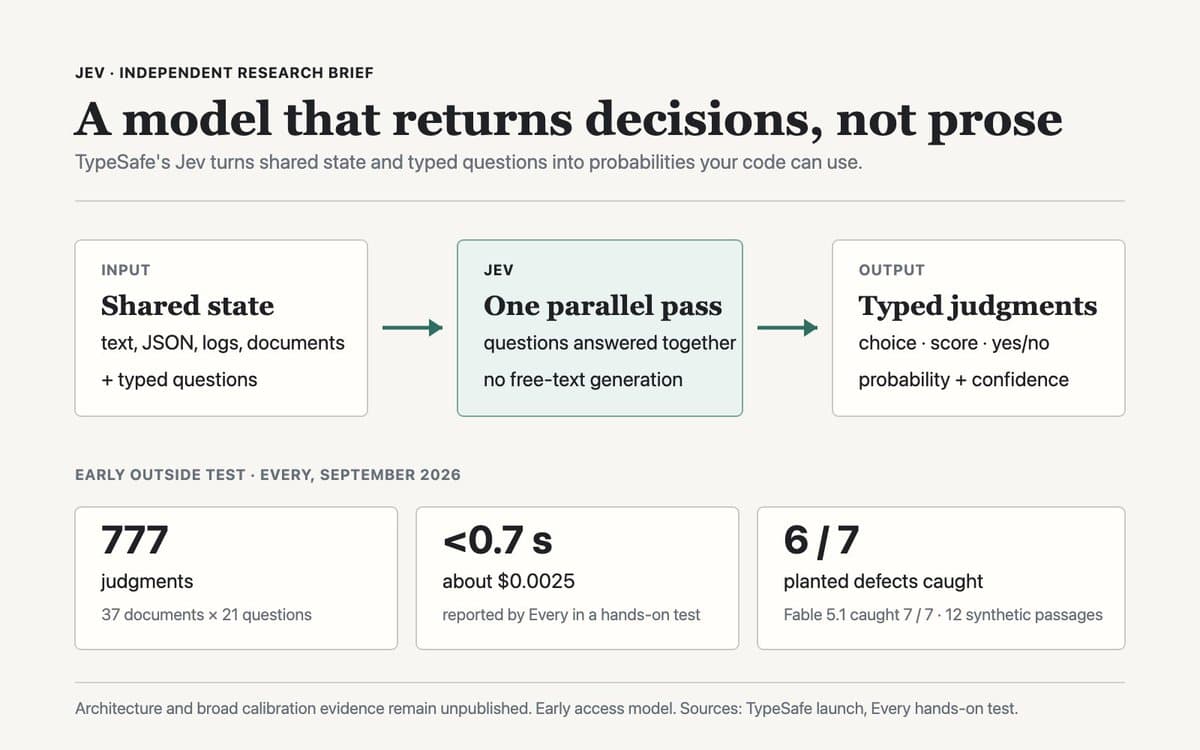
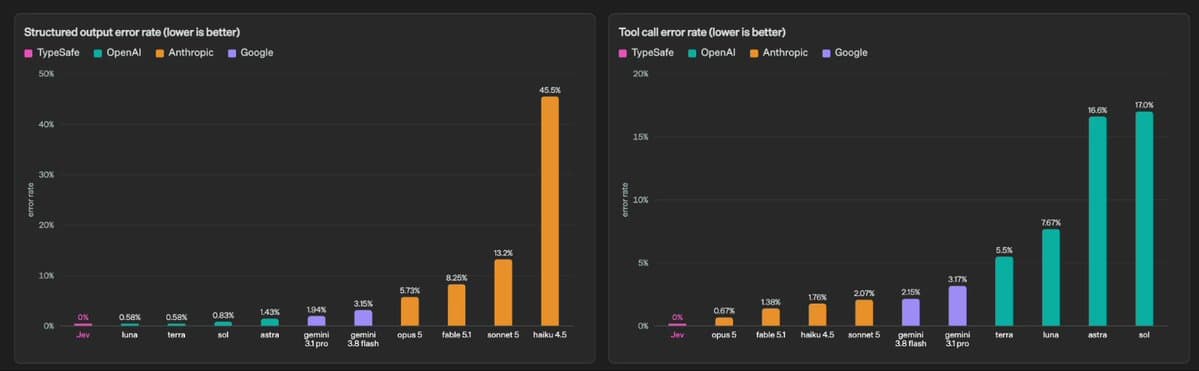
you give it shared state and a set of typed questions. It answers them together with choices, scores and probabilities that code can use directly. No prose to parse before the next action.
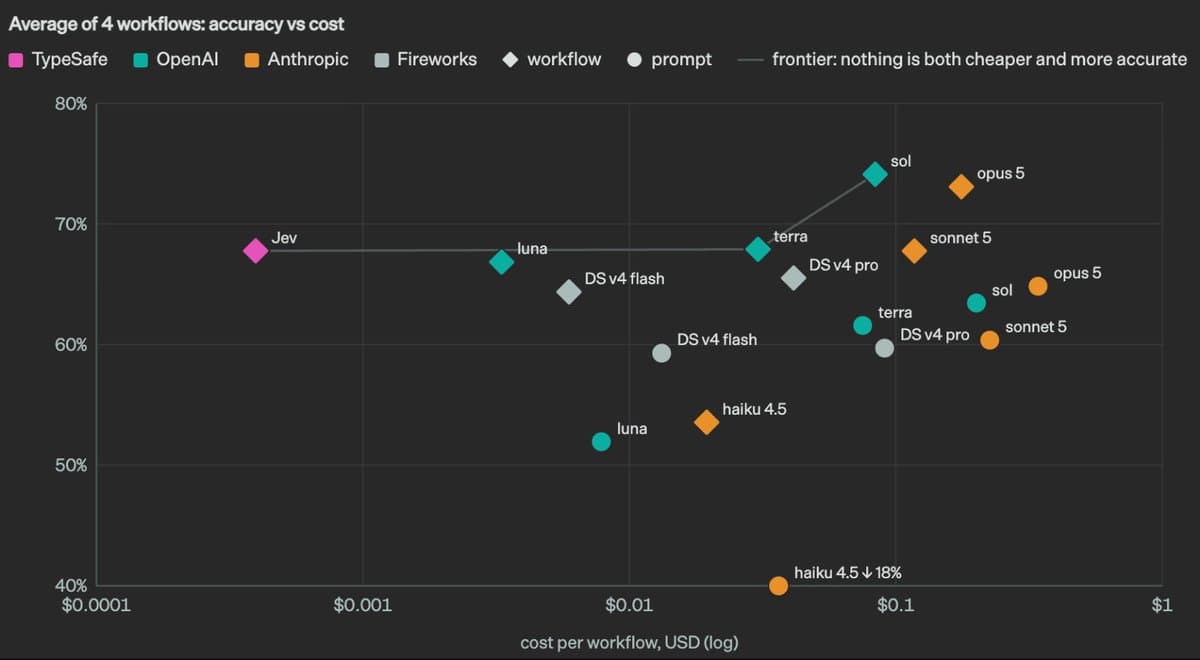
TypeSafe says responses take 70 to 500ms and cost $0.042 per million input tokens. On its own workflow eval, Jev sits around 68% agreement. Sol and Opus 5 score higher, but Jev is dramatically cheaper.
The outside test from @every is more useful. They ran 21 checks across 37 documents and got 777 judgments back in under 0.7 seconds for about $0.0025.
in a smaller test, Jev caught 6 of 7 planted defects. Fable 5.1 caught all 7, but took around 25x longer and cost about 580x more.
I’d use Jev around a stronger model for the small decisions agents make constantly:
- route this request,
- flag this action,
- score this output,
- ask for review, or
- stop before doing something expensive.
the crypto fit is quite natural too.
Blockchains are good at deterministic execution. They are bad at understanding messy offchain state.
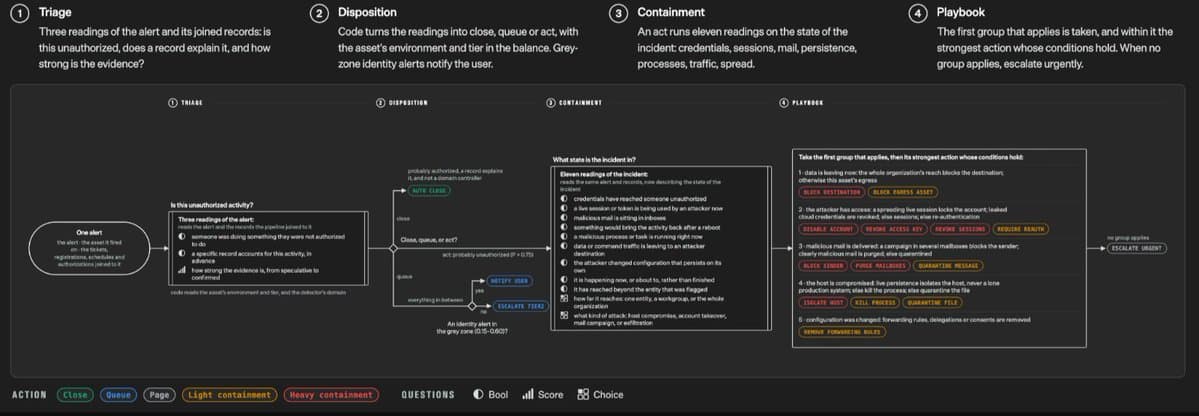
Jev could sit before execution and cheaply score governance proposals, classify transactions, triage security alerts, or decide whether a wallet action needs another model or a human before signing.
This is where the “AI-based economic revolution” framing starts to make sense to me. Millions of tiny, priced judgments feeding constrained and auditable execution.
crypto still has to answer the ugly part: how do we verify calibration, and who carries the loss when a confident decision is wrong?