ROUTEAI infra
Jev: A System One Model for AI Decisions

parth jain@parthjain_1
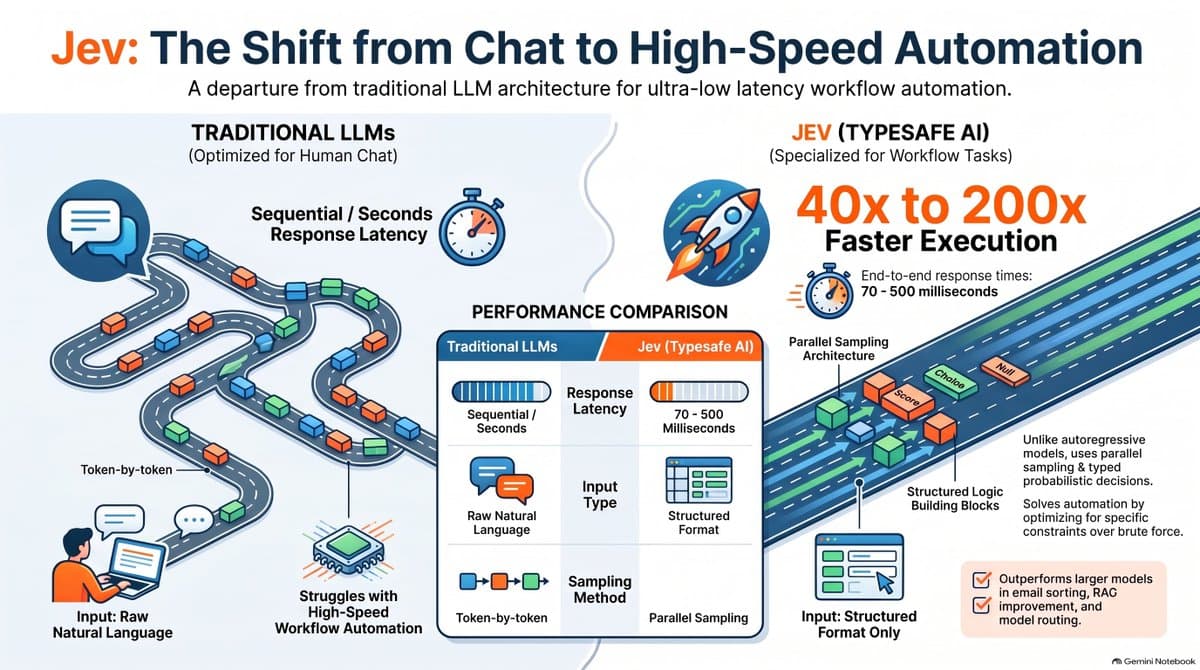
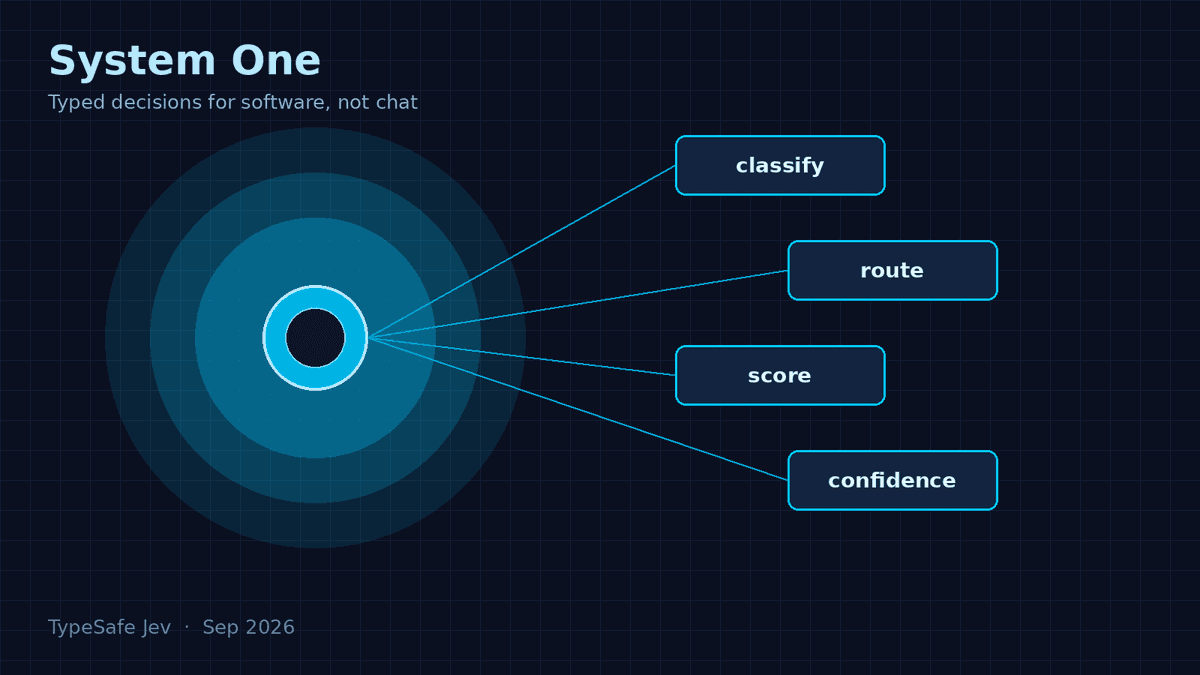
Jev is a new category of AI model designed for decision-making rather than generation, offering low latency and cost-effective inference through three primitives: Choice, Score, and Noul, all with calibrated confidence scores.
TakeThree primitives: Choice: picks one option from a defined list, returns the answer + probability distribution across all options + confidence score.
Pattern↑ State to typed decisions for software
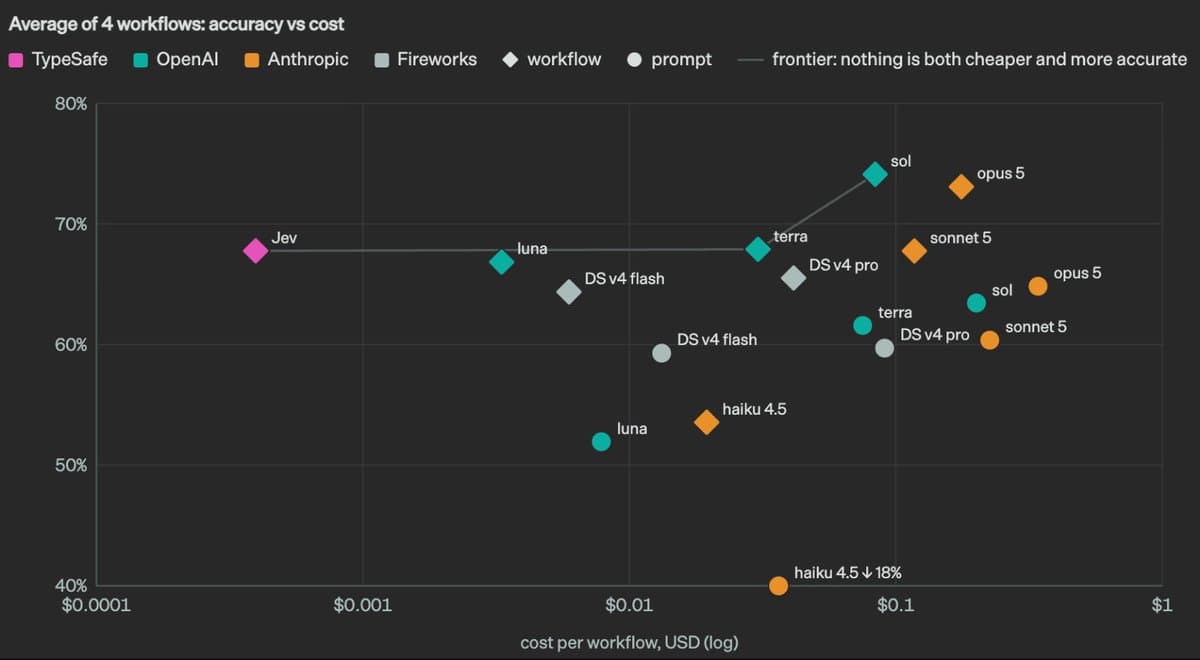
Most AI teams are running 80% of their inference workload through a model that costs 100x more than it needs to.
Not because they want to. Because there was no alternative.
The alternative is here.
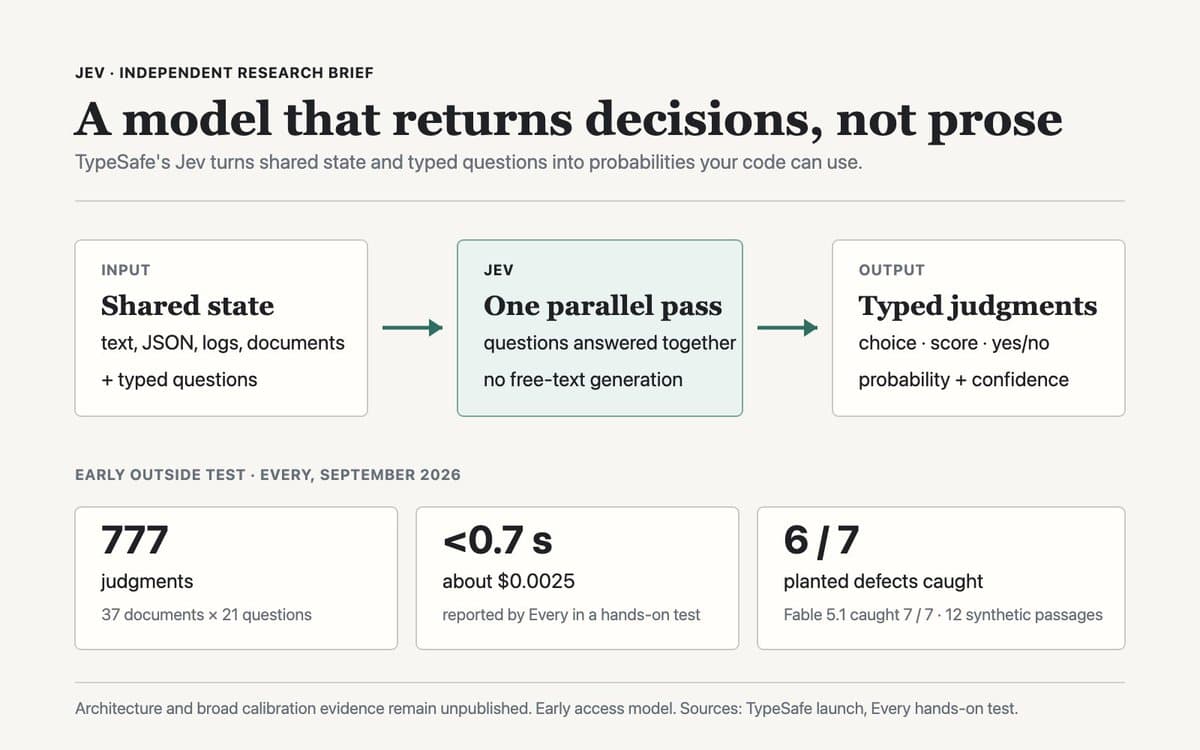
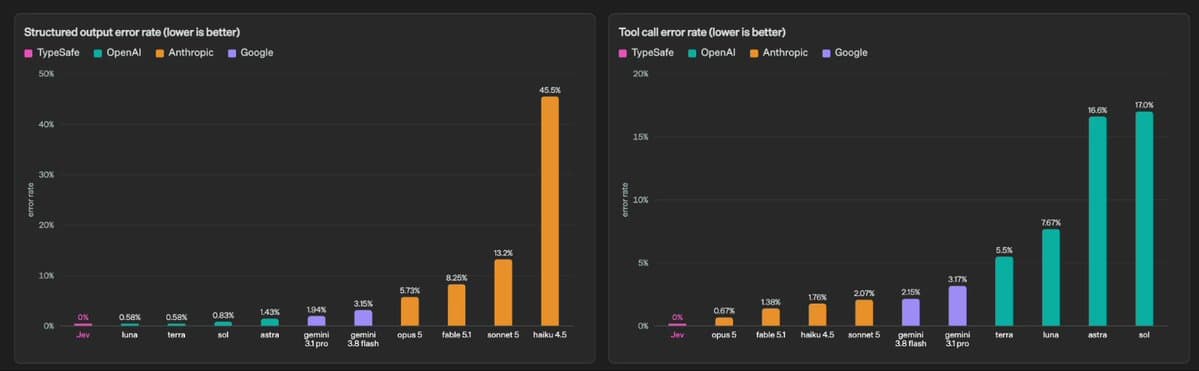
Jev by @typesafeai is not a better LLM. It is a different category. A System One Model: built for decisions, not generation. $0.042 per million tokens. Output free. 70ms median latency.
Three primitives:
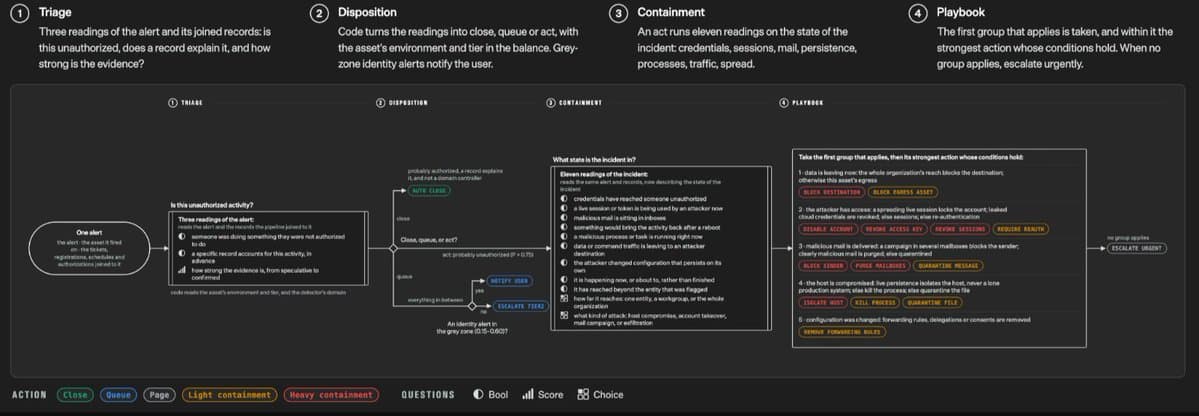
Choice: picks one option from a defined list, returns the answer + probability distribution across all options + confidence score.
Score: rates on an ordered scale you define (2-10 levels), returns rating + probabilities + confidence.
Noul: yes/no as a calibrated probability (0.0-1.0 float). Not "yes" or "no." 0.87.
All of them evaluate in parallel in a single API call. You pay for state once, not per question.
The part that changes how you build: confidence scores that are actually calibrated. When Jev returns 0.87 confidence, it means "we are right about 87% of the time at this confidence level." RLHF models say "I'm quite certain" and have no idea how certain they actually are.
You use this in code. If confidence > 0.85, route automatically. If confidence < 0.65, escalate to human. That is a logic branch that did not exist before because there was no reliable confidence signal.
I spent the past few weeks going deep on Jev across 8 domains. 160 use cases. Voice AI, GTM Engineering, Product Management, Agent Loops, Inference.
Dropping the full series here over the next few days. If you build AI products in production and you have not looked at what this model class makes possible, start with Article 01.
Related builds